
Purchases
Recurring bills
Bills that repeat on a schedule, such as rent or software, created for you.
In the app: Purchases › Recurring Bills
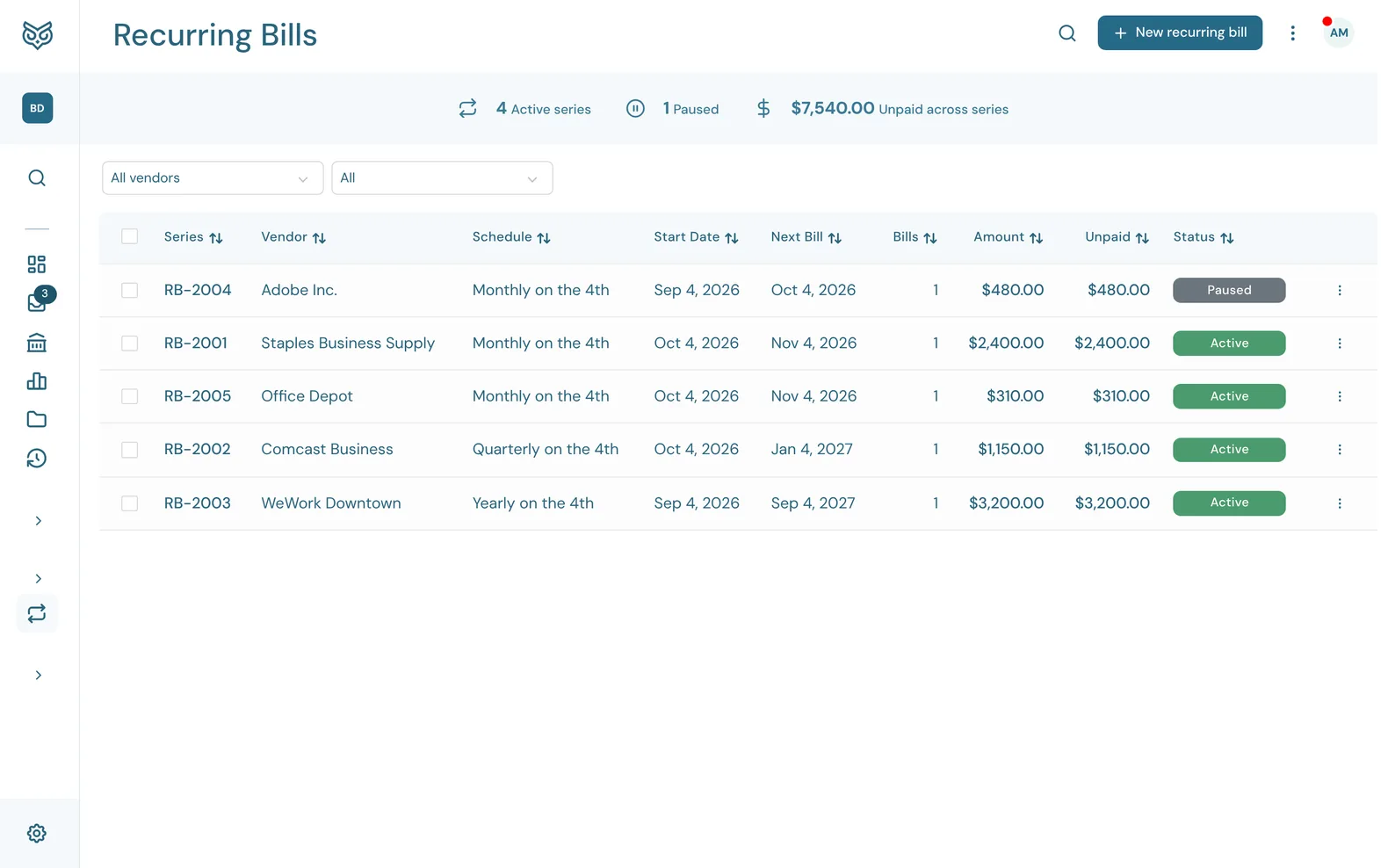
A recurring bill is a series: WizeBooks creates the next bill on its date, so you don't enter rent or a software subscription every month.
The top of the page

- Search filters the list as you type.
- New recurring bill opens a new bill set to repeat (see Setting one up).
- More options: print or export the list, show or hide the stat band, and choose columns, page size and row height.
- The stat band: how many series are Active and Paused, and the amount Unpaid across series (what's still owed on the bills they've made).
The list
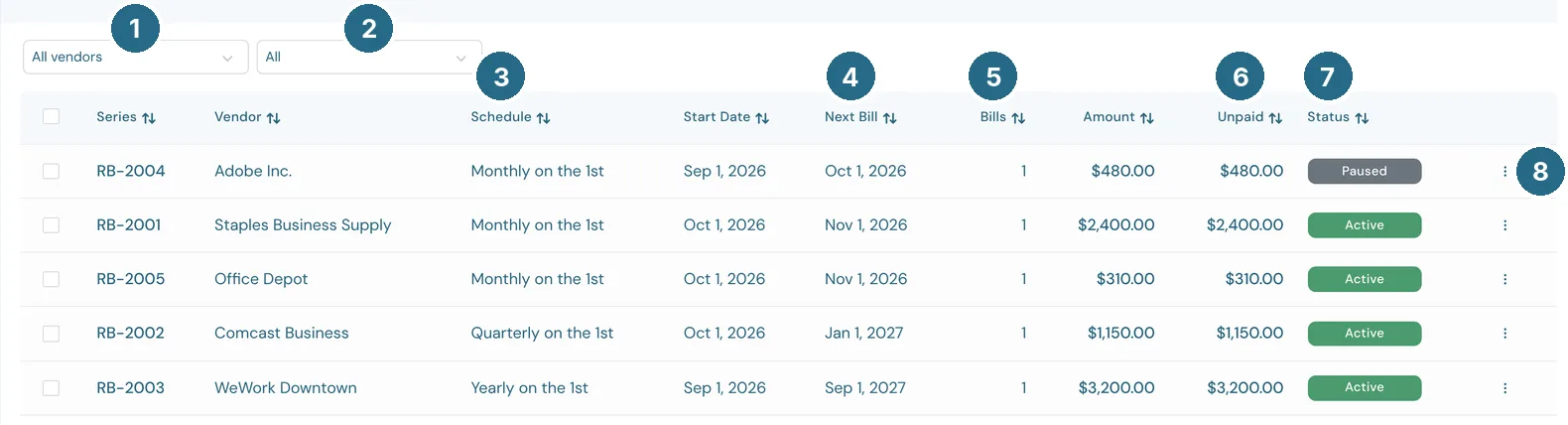
- All vendors: one vendor's series only.
- The status filter: All, Active, Paused or Canceled, with how many of each.
- Schedule: how often it bills, for example "Monthly on the 1st".
- Next Bill: when the next bill will be created.
- Bills: how many it has made so far.
- Unpaid: what's still owed across its bills.
- Status: Active, Paused or Canceled.
- The row's ⋮ menu (below).
Series (its number), Vendor, Start Date and Amount (each bill's total) fill in the rest. Click a row to open the series.
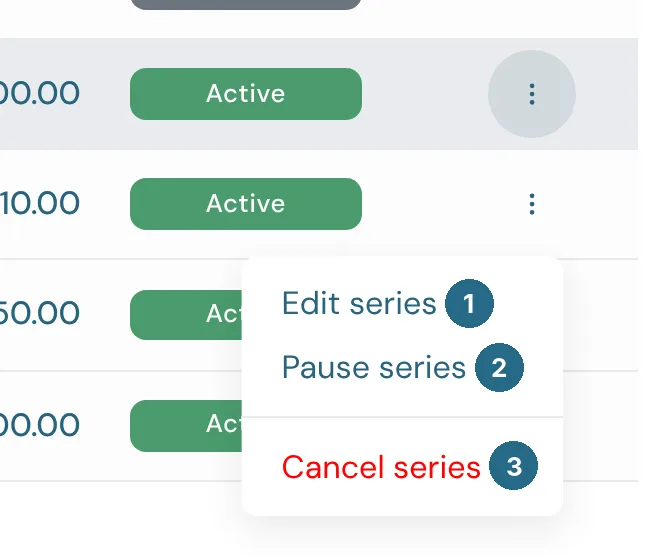
- Edit series opens it. Changes apply to the bills it makes from now on, not ones already made.
- Pause series stops new bills until you resume it, after asking you to confirm. On a paused series this reads Resume series.
- Cancel series stops it for good. Bills it already made are kept. A canceled series can only be opened with View series.
Setting one up
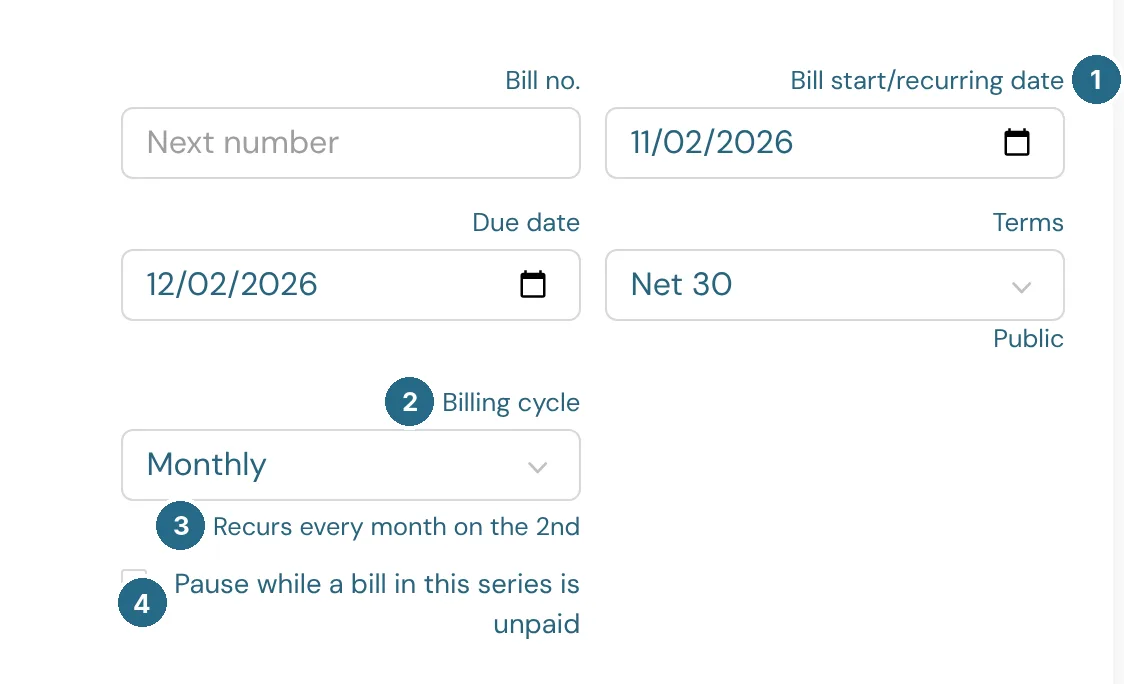
- Bill start/recurring date: the first bill's date. Later bills fall on the same day of the month, quarter or year.
- Billing cycle: Monthly, Quarterly or Yearly. One-Time is an ordinary bill.
- The line below spells out the schedule, for example "Recurs every month on the 2nd".
- Pause while a bill in this series is unpaid holds back the next bill while one is still owed. It's off by default, because a bill you owe still needs to be on your books whether or not you've paid the last one.
Everything else on the form, from the vendor to the lines, works as on a bill.
Updated in v1.0.0